
How commercial peptides are safely compounded
Published November 24, 2026 · 12 min read
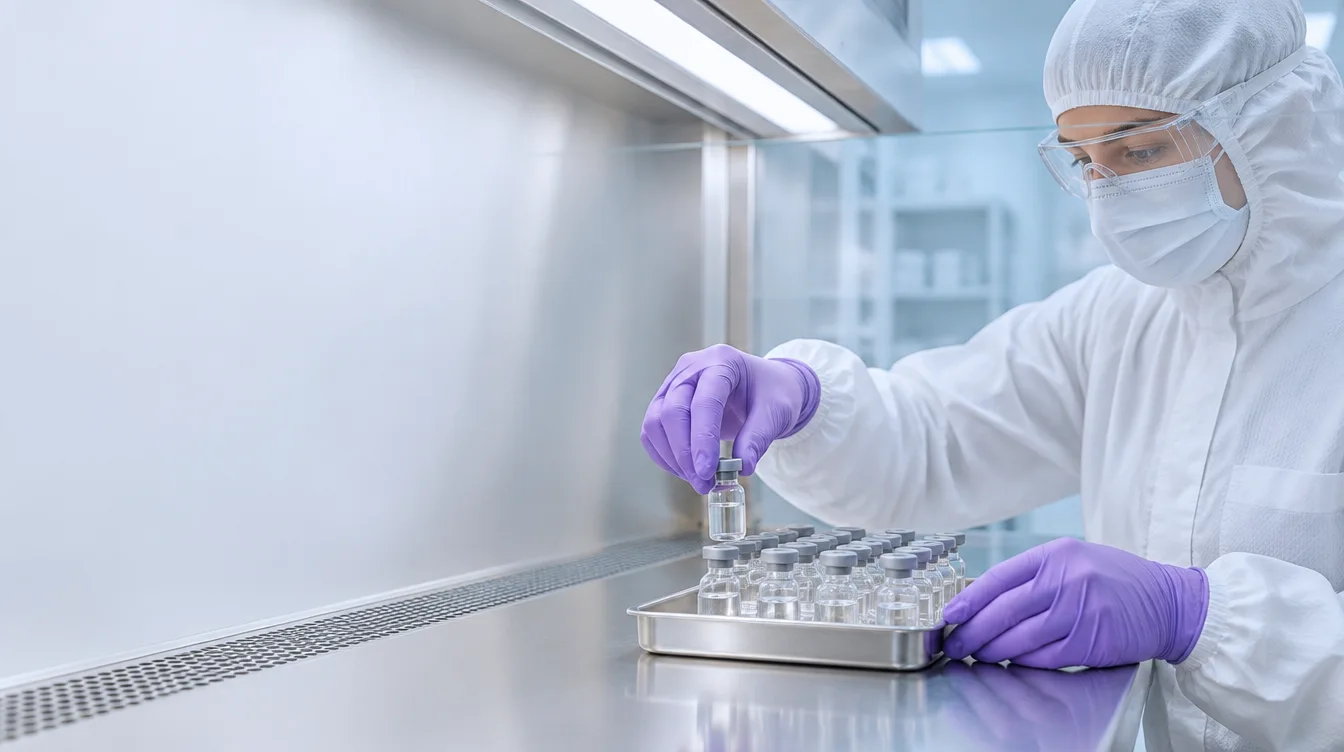
Bacterial lipopolysaccharides are the most common source of pyrogens, the compounds that raise body temperature by acting on the hypothalamus [1]. So the question worth asking about any commercial peptide is blunt: how does a compounding pharmacy keep that contamination out of a vial you'd inject?
The answer lives in the unglamorous parts of the process. Sterile preparations are produced using methods like heat, gas, radiation and filtration [2], and the facilities making them need a documented quality-assurance system watched by quality control to cut contamination risk [3]. Batch testing and endotoxin screening sit on top of that.
Here's what those controls look like in plain language, from cleanroom practice to recalls and recent FDA inspection activity. And here's which quality signals to check before you trust a source.
How compounding pharmacies differ from traditional drug manufacturers
A compounding pharmacy makes peptides in small batches, often for one person at a time. A commercial manufacturer runs large production lines under a different set of rules. That difference in scale explains almost everything about how each one is regulated and where its ingredients come from.
Three categories matter, and they don't carry the same obligations.
- 503A pharmacies compound for a specific patient with a prescription. They're licensed by state boards of pharmacy, and their oversight runs through state law rather than a federal manufacturing approval.
- 503B outsourcing facilities compound in larger volumes, sometimes without a patient-specific prescription, and register with the FDA. They sit closer to a manufacturer in how they're inspected.
- Commercial manufacturers hold an FDA approval for a finished drug product. That approval covers the molecule, the manufacturing process and the labeled claims together.
Raw ingredient sourcing is where the gaps show. A commercial manufacturer buys active pharmaceutical ingredient under tight documentation and supplier qualification, and the FDA can inspect the site that made it. A compounding pharmacy sources its own API, and the paper trail behind that powder or vial is only as good as the supplier's certificate and the pharmacy's own verification.
Same molecule, very different chain of custody.
Inside the sterile cleanroom: physical controls and filtration
Sterile compounding leans on engineering before it leans on technique. The cleanroom, the hood and the filter do most of the heavy lifting, so the people inside don't have to be perfect every second.
A laminar airflow hood delivers a steady curtain of filtered air that sweeps particles away from the open vial. That airflow sits inside a classified cleanroom, so the air feeding the hood is already clean before it ever reaches the product.

Physical controls shrink contamination risk. They don't erase the human variable, which is why a 2024 pilot study of 25 qualified cleanroom operators found UV-dye checks caught missed spots on the backs of hands and thumbs during hand washing and disinfection[4].
That pilot was small, and it looked at operator technique rather than finished product, so treat it as a pointer rather than proof. The practical takeaway still holds: gowning and hand hygiene get audited for a reason.
When you weigh a compounded peptide source, cleanroom controls are part of the quality picture, not the whole of it. Batch testing and lot records fill in the rest.
How compounded peptides are tested for sterility, potency, and identity
How much testing a batch gets depends on the type of pharmacy. 503B outsourcing facilities follow federal manufacturing standards (CGMP), which include testing batches before release. 503A pharmacies follow USP <797>, where the testing required depends on the type of preparation and how long it's labeled to stay in use (its beyond-use date). Where testing applies, it answers three separate questions: is the peptide the right molecule, is it present at the strength it should be, and is it free of contamination.
High-performance liquid chromatography (HPLC) is commonly used for the first two. It separates the components of a sample and measures how much of each is there, so a lab can confirm the peptide's identity and quantify its potency against a reference standard.
Sterility testing answers the third, and it's the slowest step. Samples are incubated in growth media for a set period and checked for any microbial growth.
- Identity and potency confirmed by HPLC against a known reference standard.
- Sterility testing where the preparation type or beyond-use date requires it.
- Endotoxin screening run alongside sterility to catch bacterial debris that filters miss.
- Batch records tying each lot to its raw materials, equipment and test results.
- Supplier Certificates of Analysis on file for each lot of active ingredient.
The pharmacy also keeps a Certificate of Analysis from its supplier for each lot of active ingredient it buys. Federal law requires 503A pharmacies to use bulk ingredients that come with one. It's part of the pharmacy's own quality checks. It isn't shipped with prescriptions, and patients don't need to collect it.
What bacterial endotoxins are and why injectable screening matters
Bacterial endotoxins are fragments of bacterial cell walls that survive sterilization and fire up your body's inflammatory response.
Pyrogens cause fever by activating the thermoregulatory center in the hypothalamus.[1] In an injected product, a contaminated batch can lead to adverse effects that include life-threatening conditions.[1] That's the whole reason this test exists.
Sterile filters won't save you here. Endotoxin molecules are small enough to slip through the 0.22-micron filtration that removes bacteria, so a visually clear vial can still carry a fever-causing load. Sterility and endotoxin are two separate tests for two separate risks.
Pharmacies screen for endotoxin with the Limulus Amebocyte Lysate (LAL) test, which uses a clotting reaction from horseshoe crab blood. A 2024 comparison found the recombinant Factor C (rFC) assay was as accurate as LAL against reference standard endotoxin.[5] Some biopharmaceutical samples interfered more with rFC, though dilution cleared it.[5]
Either method works when it's run and documented. What matters is that a batch was tested against a stated limit, not which assay sits in the lab.
A compounded peptide can pass a sterility test and still carry endotoxins. The endotoxin screen is its own non-negotiable check.
How peptide recalls work and the safety red flags that trigger them
A recall is a paper trail in reverse. The pharmacy or the FDA traces a problem back to a specific lot number, then pulls every vial that shares it.
That's why lot traceability matters more than almost anything else on a label. Your vial's lot number ties it to a batch record, a sterility result and a set of raw ingredients. Without that link, a problem can't be contained.
There are two paths to a recall. A pharmacy can pull a lot voluntarily when its own testing or records show trouble. The FDA can also request a recall, often after an inspection or reports of a problem.
Most red flags come down to a few recurring themes:
- Lost sterility assurance — a failed sterility test, a cleanroom breach or a gap in the batch record.
- Potency variance — a batch that doesn't match its labeled strength, often caught by potency testing.
- Endotoxin problems — a batch that fails pyrogen limits and shouldn't reach an injectable patient.
- Traceability gaps — missing lot records or raw ingredient documentation that make containment impossible.
Watch for the language of a recall notice. "Lack of sterility assurance" means the pharmacy can't prove the batch was sterile, even if no illness has been reported yet.
Recent regulatory shifts, FDA inspections, and peptide enforcement
Enforcement is tightening, and the gap between a licensed compounding pharmacy and an unregulated online seller is widening. The two operate under completely different rules.
Section 503B outsourcing facilities compound large quantities of medication without patient-specific prescriptions. But a 2021 review found they face real gaps: no finalized 503B Bulks List, undefined time between FDA inspections, and little follow-up on concerns raised during those inspections[6]. That's the regulatory machinery catching up, not a clean bill of health.
Inspections lean heavily on whether a facility actually runs a quality system, not just whether it has a clean room. Narrative reviews of sterile compounding note that documented policies and procedures, monitored through quality control, are what reduce contamination risk and address the observations FDA commonly cites on Form 483s[3][7]. In plain terms, the paperwork is part of the safety.
The clearest line isn't peptides versus no peptides. It's a state-licensed pharmacy with inspection records and batch testing versus a storefront selling research chemicals with neither.
A seller labeling a peptide "for research use only" is telling you it isn't held to pharmacy standards at all. Check the license and the inspection history yourself.
How to verify pharmacy quality signals before receiving a compounded peptide
You can check most of a pharmacy's safety story before a package ever ships. The signals are public, and they're specific enough to separate a licensed operation from a reseller with a polished website.
- State licensing — confirm the pharmacy holds a license in your state, not just the state where it's based, and that the license covers sterile compounding.
- USP <797> references — look for explicit mention of USP <797> (sterile compounding) and, where hazardous drugs are handled, USP <800> compliance on the pharmacy's own materials.
- Prescription required — a pharmacy that ships an injectable peptide without a prescription isn't following pharmacy law.
- Lot number and use-by date on the label — every vial should carry both. The lot number ties it to a batch record, and it's what makes a recall possible.
- Telehealth partnership — a licensed pharmacy working with a physician-led telehealth brand operates under a different set of obligations than an unregulated research chemical vendor selling "not for human use" vials.
Vague licensing, no prescription requirement, or "research use only" labels are the clearest reasons to look elsewhere. Goprolean prescriptions are filled by licensed U.S. pharmacies, and questions about your medication go to your care team.
Related reading
You now have the full picture: the steps compounders use to make peptides, the checks that lower contamination risk, how recalls and endotoxin screening work, and the regulatory news that actually matters. That's more than most people ever learn about what's in the vial.
The short version: get it through a prescriber, from a licensed pharmacy, and avoid "research use only" vials.
If you're weighing sermorelin, the next step is to see what a physician-led option involves. Explore sermorelin options to see how the intake, review and pricing work.
Frequently asked questions
What is the difference between a 503A and a 503B compounding pharmacy?
A 503A pharmacy compounds for individual patients with a prescription and is overseen mainly by its state board of pharmacy. A 503B outsourcing facility registers with the FDA, can compound larger batches without patient-specific prescriptions, and must follow federal manufacturing standards. 503B facilities still face gaps, including no finalized 503B Bulks List and undefined time between FDA inspections.
How do pharmacies prove a compounded peptide is sterile?
They don't prove it with a single test. Sterile preparations are made using methods like heat, gas, radiation and filtration, and that has to sit inside a documented quality-assurance system checked by quality control. It's process plus paperwork, not one lab result.
Why are bacterial endotoxins dangerous in injectable peptides?
Endotoxins are pyrogens, meaning they push body temperature up by acting on the thermoregulatory center in the hypothalamus. Bacterial lipopolysaccharides are the most common source. In an injected product there's no filtering step after the fact, so that risk has to be controlled before the vial is sealed.
What is a Certificate of Analysis, and do patients get one?
It's a lab report for a specific lot of an ingredient: what was tested and the results. Compounding pharmacies get one from their supplier for each lot of active ingredient, and 503A pharmacies are required to use ingredients that come with a valid one. It isn't sent with each prescription. For patients, the more useful checks are that the pharmacy is licensed and that a physician prescribes the medication.
How do legitimate compounded peptides differ from research chemicals?
Research chemicals are sold for lab use, not for people, so nobody is claiming they're sterile or pure enough to inject. Legitimate compounding sits inside a documented quality system meant to reduce contamination. That accountability is the difference.
References
- New approaches to the issue of pyrogens in parenteral preparations. Ceska a Slovenska farmacie : casopis Ceske farmaceuticke spolecnosti a Slovenske farmaceuticke spolecnosti, 2024. PMID 39937639.
- Basics of Sterile Compounding: Sterilization Methods in Sterile Product Manufacturing. International journal of pharmaceutical compounding, 2024. PMID 38768508.
- Basics of Sterile Compounding. Quality Assurance and Quality Control: Being Prepared for U.S. Food and Drug Administration Inspections and Staying in Compliance with United States Pharmacopeia Chapter <797>: Part 2. International journal of pharmaceutical compounding, 2018. PMID 30384348.
- Development and Implementation of an Ultraviolet-Dye-Based Qualification Procedure for Hand Washing and Disinfection to Improve Quality Assurance of Pharmacy Preparations and Compounding, Especially in Cleanrooms: A Pilot Study. Pharmacy (Basel, Switzerland), 2024. PMID 38804465.
- A Study on the Application of Recombinant Factor C (rFC) Assay Using Biopharmaceuticals. Microorganisms, 2024. PMID 38543567.
- Outsourcing facilities and their place in the U.S. drug supply chain. Journal of the American Pharmacists Association : JAPhA, 2021. PMID 32863181.
- Quality Assurance and Quality Control: Being Prepared for U.S. Food and Drug Administration Inspections and Staying in Compliance with United States Pharmacopeia Chapter <797>: Part 1. International journal of pharmaceutical compounding, 2018. PMID 30384338.
Compounded medications, including those prescribed through Goprolean, are not FDA-approved and have not been reviewed by the FDA for safety, effectiveness or quality. Individual results vary. This article is educational and is not medical advice. Prescriptions are issued only after a licensed physician reviews your medical intake.
More in Research

November 16, 2026
Peptides Explained: What They Are and What the Research Shows
A guide to peptides and peptide therapy: what BPC-157, Epitalon, MOTS-c and PT-141 research shows, and how Goprolean's clinician-reviewed care plans work.
November 16, 2026
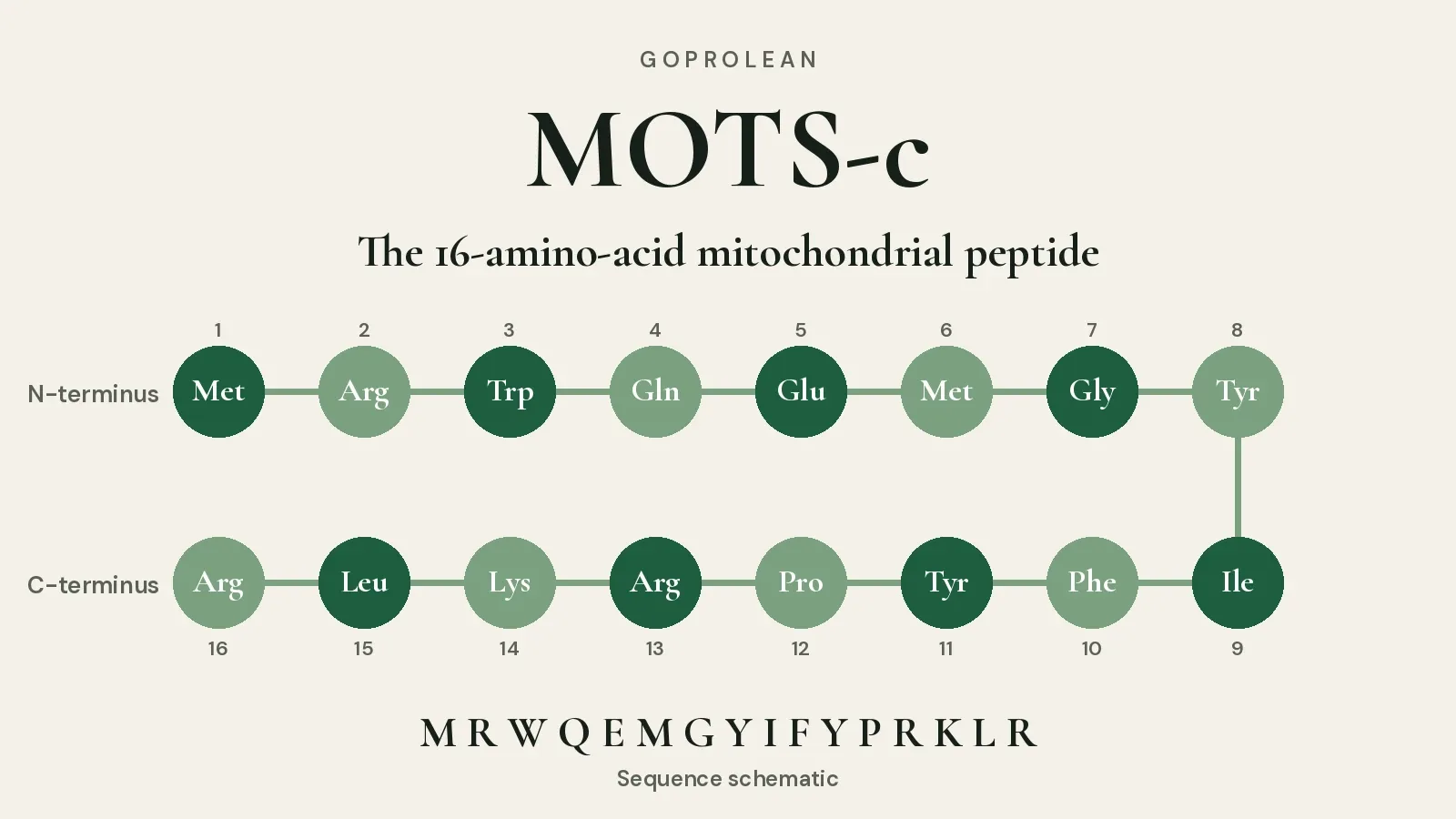
MOTS-c: Exploring the Science of Mitochondria and Metabolism
What MOTS-c research shows, from mouse metabolism and exercise studies to an early placebo-controlled trial, and how Goprolean's clinician-reviewed care plans work.
November 16, 2026
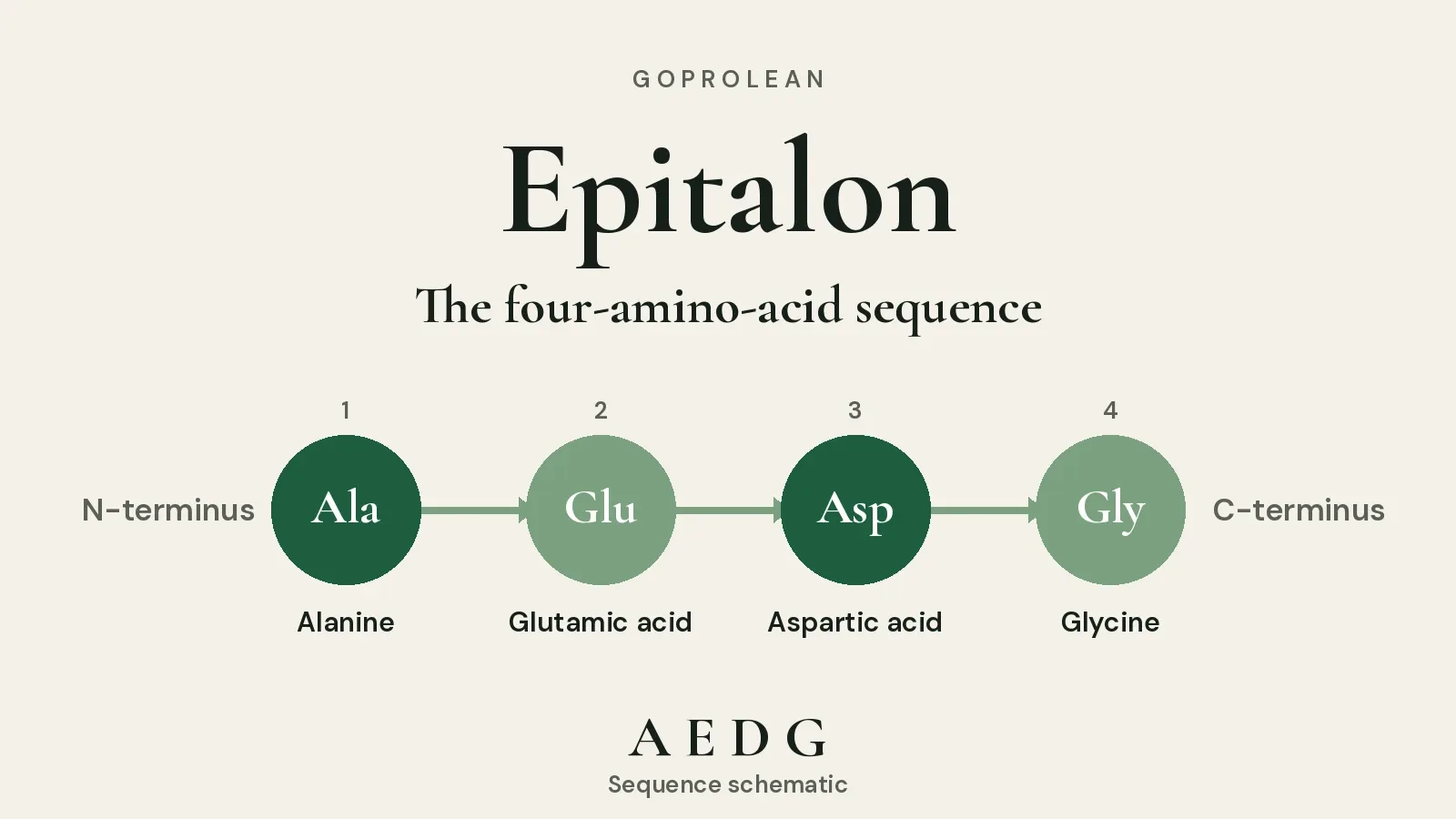
Epitalon: Understanding the Science Behind Cellular-Aging Research
What Epitalon research shows, from telomere studies in human cells to animal lifespan findings and the 2026 FDA advisory vote, and how Goprolean's care plans work.