
Do GLP-1 Medications Slow Aging? What the Research Shows
Published September 4, 2026 · 31 min read

Estimated reading time: 25–30 minutes
The Short Answer
GLP-1–based medications are not proven longevity drugs, and they should not be prescribed simply to make a healthy person “live longer.”
But that does not mean their relevance to healthy aging is imaginary.
A rapidly expanding body of research suggests that metabolic dysfunction—particularly visceral adiposity, insulin resistance, chronic inflammation, abnormal nutrient signaling and associated cardiovascular, kidney, liver and sleep disorders—overlaps with several biological processes involved in aging.
Modern GLP-1 receptor agonists such as semaglutide, and related incretin therapies such as the dual GIP/GLP-1 receptor agonist tirzepatide, can substantially improve many of those metabolic abnormalities.
Large randomized clinical trials have now shown reductions in cardiovascular events, kidney disease progression, worsening heart failure, progression from prediabetes to diabetes, sleep apnea severity, liver inflammation and fibrosis, and obesity-associated physical limitations in appropriately selected populations. [11–19]
Even more provocatively, a small randomized trial published in 2026 reported that semaglutide altered multiple DNA-methylation measures of biological aging. [5]
But there is an equally important other side of the story.
Large randomized trials of semaglutide in Alzheimer's disease did not slow clinical cognitive decline, and a phase 3 study of exenatide in Parkinson's disease also failed to demonstrate disease modification. [21–22]
And substantial pharmacologic weight loss can include loss of lean tissue, making muscle preservation especially important when the long-term goal is not simply a lower number on the scale but greater physical resilience decades later.
That distinction—between weight loss and healthspan—may be the most important way to understand the relationship between GLP-1 therapy and aging.
Aging Is More Than the Passage of Time
Chronological age tells us how long someone has been alive.
Biological aging is something different.
Two people can both be 60 years old yet have remarkably different cardiovascular fitness, insulin sensitivity, muscle strength, kidney function, vascular health, inflammatory burden, cognitive function and vulnerability to disease.
This observation helped create the field now known as geroscience: the study of biological mechanisms that contribute simultaneously to aging and multiple age-related diseases.
The goal is not necessarily immortality or reversal of chronological age. A more realistic goal is extending healthspan—the portion of life during which a person remains metabolically healthy, physically capable, cognitively functional and relatively free from disabling chronic disease.
In 2013, Carlos López-Otín and colleagues proposed nine biological “hallmarks” that appeared to characterize mammalian aging. The framework was expanded in 2023 to twelve hallmarks:
- Genomic instability
- Telomere attrition
- Epigenetic alterations
- Loss of proteostasis
- Disabled macroautophagy
- Deregulated nutrient sensing
- Mitochondrial dysfunction
- Cellular senescence
- Stem-cell exhaustion
- Altered intercellular communication
- Chronic inflammation
- Dysbiosis
[1–2]
These pathways interact extensively.
Mitochondrial dysfunction can increase oxidative stress. Oxidative stress can damage proteins and DNA. Dysfunctional adipose tissue can release inflammatory cytokines. Chronic inflammation can interfere with insulin signaling, vascular function and muscle metabolism. Impaired autophagy can allow damaged cellular components to accumulate.
Aging therefore does not appear to be a single molecular clock.
It behaves more like a network.
That becomes important when evaluating GLP-1 therapies because their potential relevance to healthy aging is probably not that they “switch aging off.”
It is that they may reduce stress across several interconnected systems that become increasingly dysfunctional with age.
Obesity and Metabolic Dysfunction May Accelerate Features of Biological Aging
One of the most important developments in modern geroscience is the realization that obesity and aging share a surprising number of biological characteristics.
A 2026 review proposed the term Obesity-Accelerated Aging, or “ObAGE,” to describe this relationship. The authors argued that excess adiposity can activate several aging-associated processes earlier in life, including chronic inflammation, abnormal nutrient sensing, cellular senescence and epigenetic alterations. [4]
This does not mean that obesity literally makes every cell older.
It means that metabolic dysfunction can expose tissues to biological stressors that resemble or amplify processes seen during aging.
Visceral adipose tissue is especially important.
Adipose tissue is not simply an energy-storage compartment. It is an endocrine and immunologically active organ.
As adipocytes enlarge and become dysfunctional, the surrounding environment can develop:
- macrophage infiltration,
- increased inflammatory cytokine signaling,
- impaired insulin signaling,
- altered adipokine secretion,
- increased release of free fatty acids,
- ectopic lipid deposition,
- endothelial dysfunction,
- mitochondrial stress.
Chronic metabolic overload can consequently influence the liver, skeletal muscle, cardiovascular system, kidneys, pancreas and brain simultaneously.
Human studies have also identified associations between obesity and accelerated epigenetic-aging signatures. For example, BMI has been associated with accelerated DNA-methylation age within metabolically active visceral adipose tissue. [24]
This provides a useful conceptual shift.
Treating obesity successfully may do more than reduce body weight.
When excessive visceral adiposity is driving insulin resistance, hypertension, fatty liver disease, sleep apnea and systemic inflammation, reducing that metabolic load may reduce multiple pressures associated with declining healthspan.
That does not prove that obesity treatment slows intrinsic aging.
But it provides a biologically plausible reason why effective metabolic treatment could delay some consequences commonly associated with aging.
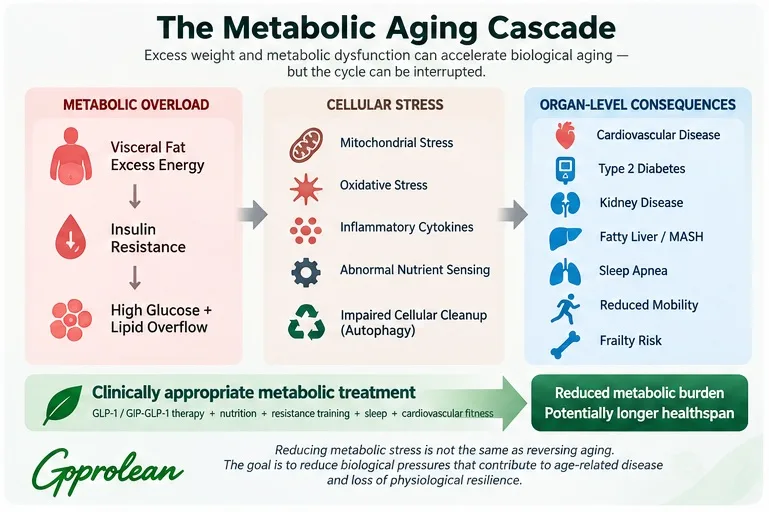
Reducing metabolic stress is not the same as reversing aging. The goal is to reduce biological pressures that contribute to age-related disease and loss of physiological resilience. _ (Diagram showing how visceral adiposity and insulin resistance can contribute to inflammation, mitochondrial stress and organ disease, and how comprehensive metabolic treatment may interrupt the cycle.)
What GLP-1 Signaling Actually Does
Glucagon-like peptide-1 is an incretin hormone produced primarily by intestinal L cells following food intake.
Its classical physiological actions include:
Increasing glucose-dependent insulin secretion. When glucose rises after eating, GLP-1 helps pancreatic beta cells release insulin.
Suppressing inappropriate glucagon secretion. This helps reduce excess hepatic glucose output.
Delaying gastric emptying. The effect is especially prominent early in treatment and contributes to post-meal glucose regulation.
Increasing satiety. GLP-1 signaling within central nervous system appetite pathways reduces hunger and energy intake.
Modern pharmacologic GLP-1 receptor agonists are engineered to remain active much longer than native GLP-1.
Semaglutide is a GLP-1 receptor agonist.
Tirzepatide is technically different: it activates both glucose-dependent insulinotropic polypeptide, or GIP, and GLP-1 receptors.
For simplicity, these medications are frequently discussed together as incretin-based therapies, although they should not be considered pharmacologically identical.
Their relevance to healthspan begins with their substantial effects on body weight, glucose regulation and visceral adiposity.
But the research increasingly suggests effects across additional pathways involving inflammation, mitochondrial biology, vascular signaling and organ function.
This is where the Hallmarks of Aging framework becomes useful.
The Twelve Hallmarks of Aging: Where Do GLP-1 Therapies Actually Fit?
The evidence is far from equal across the twelve hallmarks.
That matters.
A cell-culture experiment demonstrating altered mTOR signaling is not equivalent to a randomized trial demonstrating fewer heart attacks.
Likewise, changing a DNA-methylation clock is not equivalent to proving that somebody will live longer.
A scientifically responsible assessment should therefore distinguish between:
Strong human clinical evidence
Human biomarker evidence
Preclinical mechanistic evidence
and
Speculative connections
1. Genomic Instability
Cells experience DNA damage throughout life from replication errors, oxidative stress, environmental exposures and normal metabolism.
DNA-repair mechanisms correct much of this damage, but accumulated genomic instability is considered one of the primary hallmarks of aging. [1–2]
At present, there is no convincing human evidence that semaglutide, tirzepatide or other GLP-1 receptor agonists directly repair age-related genomic damage.
GLP-1 therapy may indirectly reduce oxidative and metabolic stress capable of contributing to DNA injury, but indirect reduction in cellular stress should not be confused with genomic rejuvenation.
Evidence level for a direct GLP-1 effect: very limited.
2. Telomere Attrition
Telomeres are protective structures at chromosome ends.
They shorten through repeated cell division and are influenced by oxidative stress, inflammation, cell type and numerous other factors.
There is currently insufficient clinical evidence to conclude that GLP-1 therapies meaningfully reverse telomere attrition in humans.
Claims that GLP-1 drugs “restore telomeres” would therefore be premature.
Evidence level: insufficient.
3. Epigenetic Alterations
This hallmark became considerably more interesting in 2026.
Epigenetics describes changes in regulation of gene activity that do not require changing the underlying DNA sequence.
One widely researched approach to measuring biological aging involves patterns of DNA methylation. Algorithms using these patterns are often called epigenetic clocks.
In May 2026, researchers published a post-hoc analysis of a randomized, placebo-controlled semaglutide trial involving adults with HIV-associated lipohypertrophy.
After 32 weeks, semaglutide was associated with slower aging across several second- and third-generation DNA-methylation measures.
The reported signals included:
- PhenoAge,
- PCGrimAge,
- GrimAge V2,
- OMICmAge,
- RetroAge,
- DunedinPACE.
DunedinPACE suggested an approximately 9% slower pace-of-aging signal compared with placebo. [5]
This is arguably one of the most intriguing pieces of human evidence connecting semaglutide with aging biology.
But it requires careful interpretation.
The analysis was:
- post hoc,
- exploratory,
- relatively small,
- only 32 weeks long,
- conducted in a specific population with HIV-associated lipohypertrophy,
- based on biomarkers rather than clinical aging outcomes.
We therefore cannot conclude that semaglutide made participants biologically “younger” in a way that guarantees greater lifespan.
What the study does provide is a credible signal that improvement in metabolic physiology may influence measurable biological-aging pathways.
That deserves further investigation.
Evidence level: promising human biomarker evidence; longevity benefit unproven.
4. Loss of Proteostasis
Proteostasis refers to the cellular machinery responsible for creating, folding, maintaining and removing proteins.
With aging, damaged or misfolded proteins can accumulate.
This is relevant across numerous conditions, including neurodegenerative disorders.
GLP-1 signaling has demonstrated potentially favorable effects on cellular stress and protein-quality-control pathways in experimental models.
However, we do not have strong clinical evidence showing that GLP-1 therapy restores human proteostasis sufficiently to slow organismal aging.
Evidence level: predominantly preclinical.
5. Disabled Macroautophagy
Autophagy is one of the body's cellular recycling systems.
Damaged proteins, dysfunctional mitochondria and other cellular components can be enclosed, degraded and recycled.
Autophagy becomes less efficient with aging.
Experimental studies involving liraglutide and other GLP-1 receptor agonists suggest activation of pathways involving AMPK and mTOR can increase autophagic activity under metabolically stressful conditions. [8]
Similar effects have been investigated in liver, kidney, cardiac and neuronal models.
That is biologically interesting.
It does not yet establish that taking a GLP-1 drug in humans creates the same longevity effect as interventions that manipulate autophagy in experimental organisms.
The appropriate interpretation is that GLP-1 signaling may influence cellular quality-control mechanisms under metabolic stress.
Evidence level: mechanistically plausible, mostly preclinical.
6. Deregulated Nutrient Sensing
This is one of the strongest conceptual links between GLP-1 treatment and aging biology.
Cells continuously sense nutrient availability.
Major signaling systems include:
- insulin and IGF signaling,
- AMPK,
- mTOR,
- sirtuins.
These systems help determine whether cells emphasize growth, storage, repair or energy production.
Persistent caloric excess, insulin resistance and metabolic overload can dysregulate this balance.
GLP-1–based therapies reduce calorie intake, improve insulin sensitivity and frequently improve glucose regulation.
Experimental work also suggests interactions with AMPK/mTOR pathways.
That does not mean pharmacologic GLP-1 therapy exactly reproduces fasting or caloric restriction.
It does mean that improving metabolic homeostasis changes the environment in which nutrient-sensing pathways operate.
Evidence level: strong for metabolic regulation; moderate for direct geroscience implications.
7. Mitochondrial Dysfunction
Mitochondria are best known for producing cellular energy in the form of ATP.
But they also regulate:
- reactive oxygen species,
- apoptosis,
- calcium signaling,
- metabolic substrate selection,
- inflammatory responses.
Mitochondrial efficiency frequently declines with age and metabolic disease.
One particularly relevant human study examined people with type 2 diabetes receiving GLP-1 receptor agonists.
Compared with untreated participants with diabetes, GLP-1–treated participants demonstrated:
- lower reactive oxygen species production,
- improved mitochondrial membrane potential,
- improved oxygen consumption,
- lower inflammatory signaling,
- reduced endothelial adhesion markers.
[6]
This is important because it moves the discussion beyond animal experiments.
However, the study was not a randomized longevity trial.
It shows that GLP-1 therapy is associated with improved mitochondrial and vascular biology in a metabolically diseased population.
Whether that translates into slower intrinsic mitochondrial aging remains unanswered.
Evidence level: meaningful human mechanistic evidence.
8. Cellular Senescence
Senescent cells have permanently exited the normal cell cycle but remain metabolically active.
Many release inflammatory factors collectively described as the senescence-associated secretory phenotype, or SASP.
As senescent cells accumulate with age, they may contribute to chronic inflammation and tissue dysfunction.
Experimental studies suggest GLP-1 signaling can reduce cellular stress pathways associated with senescence.
For example, a 2025 study found that liraglutide reduced high-glucose-induced endothelial-cell senescence through pathways involving SIRT1 and p53/p65 signaling. [9]
But GLP-1 receptor agonists are not established senolytic drugs.
They have not been shown to selectively clear senescent cells in humans in the manner envisioned for experimental senolytic therapies.
A more defensible hypothesis is that reducing metabolic stress may reduce some conditions that promote premature cellular senescence.
Evidence level: preclinical and cellular; no established human senolytic effect.
9. Stem-Cell Exhaustion
Adult stem-cell pools help regenerate tissues throughout life.
Their numbers and functional capacity can decline with age.
At present, there is little direct evidence demonstrating that GLP-1 therapy restores human stem-cell reserves or reverses stem-cell exhaustion.
Claims in this area should be considered speculative.
Evidence level: very limited.
10. Altered Intercellular Communication
Healthy tissues depend on tightly regulated communication among endocrine, immune, neural and vascular cells.
Aging can disrupt that coordination.
Metabolic disease does the same.
In the human mitochondrial study described earlier, GLP-1 therapy was associated with reduced leukocyte adhesion to vascular endothelium and lower concentrations of adhesion molecules including ICAM-1 and VCAM-1. [6]
This suggests that incretin therapy may improve some aspects of immune-endothelial communication.
Again, improved communication within a metabolically stressed vascular environment should not automatically be described as “reversing aging.”
But it is an example of how metabolic therapy can influence systems that extend beyond glucose control.
Evidence level: meaningful human mechanistic evidence.
11. Chronic Inflammation: Perhaps the Most Important Intersection
Low-grade chronic inflammation associated with aging is often called inflammaging.
Inflammaging has been associated with cardiovascular disease, diabetes, chronic kidney disease, frailty, sarcopenia and other age-related conditions. [23]
Obesity can amplify many of these inflammatory pathways.
Visceral adipose tissue may produce inflammatory cytokines and recruit activated immune cells. Insulin resistance and ectopic fat deposition can further increase inflammatory signaling.
GLP-1–based treatments repeatedly reduce markers of inflammation in clinical studies.
In the mitochondrial/vascular study, GLP-1–treated participants had lower IL-6, TNF-alpha and IL-12 and higher anti-inflammatory IL-10. [6]
Clinical outcome trials provide additional support.
In STEP-HFpEF, semaglutide produced a much larger decrease in C-reactive protein than placebo while simultaneously improving heart-failure symptoms and walking capacity.
In SUMMIT, tirzepatide reduced systemic inflammation alongside improvement in obesity-related HFpEF outcomes.
It remains difficult to determine how much of this effect occurs because of:
- weight loss,
- reduced visceral adiposity,
- improved insulin sensitivity,
- direct GLP-1 signaling,
- or combinations of these mechanisms.
From a healthspan perspective, however, that distinction may be less important than the overall result.
Reducing persistent metabolic inflammation in someone with significant obesity and cardiometabolic dysfunction is likely clinically beneficial whether the anti-inflammatory effect is direct or secondary.
Evidence level: strong evidence for reducing metabolic inflammatory burden; no proof that this alone slows intrinsic aging.
12. Dysbiosis
The gut microbiome is the newest frontier in this discussion.
The 2023 Hallmarks framework formally added dysbiosis because the composition and function of the gut microbiome change with age and can influence immune regulation, metabolism and intestinal-barrier function. [2]
GLP-1 therapies may alter the microbiome indirectly through:
- reduced food intake,
- changed dietary patterns,
- slower gastrointestinal transit,
- weight loss,
- altered bile-acid physiology,
- changes in glucose metabolism.
Studies involving liraglutide, semaglutide, exenatide and dulaglutide have reported microbiome changes, but results remain inconsistent.
A recent systematic review described potentially beneficial changes in some bacterial genera while emphasizing substantial heterogeneity between studies. [10]
It would therefore be premature to market GLP-1 therapy as a microbiome treatment.
Evidence level: emerging and inconsistent.
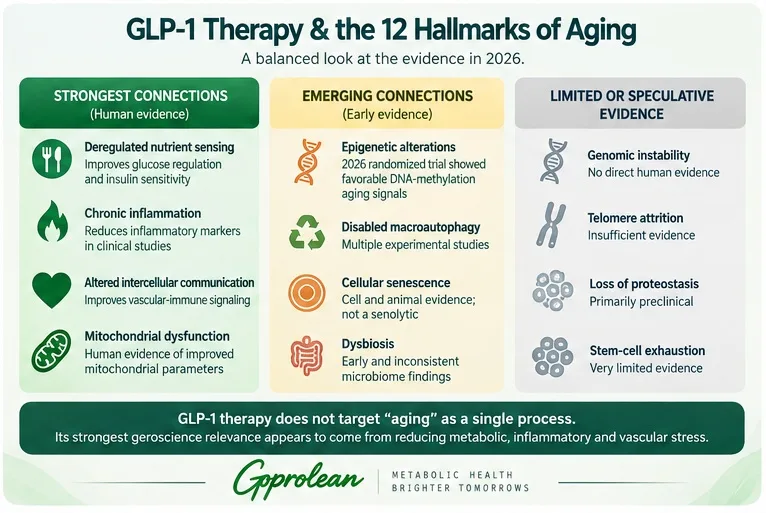
Its strongest geroscience relevance appears to come from reducing metabolic, inflammatory and vascular stress.
Biomarkers Are Interesting. Hard Clinical Outcomes Matter More.
Biological-age clocks may eventually become useful tools.
But if the goal is healthspan, clinicians should care even more about whether treatment prevents the events that make people sick, disabled or dead.
And this is where the evidence for modern incretin therapy becomes significantly stronger.
Several major trials now show that these medications affect outcomes extending far beyond body weight.
Cardiovascular Disease: SELECT
The SELECT trial enrolled 17,604 adults with overweight or obesity and established cardiovascular disease but without diabetes.
Participants received semaglutide or placebo.
Major cardiovascular events—cardiovascular death, nonfatal myocardial infarction or nonfatal stroke—occurred in:
6.5% with semaglutide
versus
8.0% with placebo
representing a hazard ratio of 0.80, or approximately a 20% relative risk reduction. [11]
This is one of the most important findings in obesity medicine.
It demonstrated that treating obesity pharmacologically could reduce major cardiovascular events even in patients who did not have diabetes.
A later SELECT analysis found an approximately 19% lower rate of all-cause death in the semaglutide group during the trial. [12]
This still does not establish semaglutide as a general longevity drug.
SELECT participants already had cardiovascular disease.
But preventing heart attacks, strokes and premature deaths in high-risk individuals is unquestionably relevant to healthspan.
Kidney Disease: FLOW
The FLOW trial studied 3,533 people with type 2 diabetes and chronic kidney disease.
Semaglutide reduced the risk of the primary kidney/cardiovascular composite outcome by 24% compared with placebo.
The study also reported:
- an 18% reduction in major cardiovascular events, and
- a 20% reduction in all-cause mortality.
[13]
Kidney function is an underappreciated component of aging.
Progressive kidney disease increases cardiovascular risk, medication complexity, hospitalization, frailty and eventually the risk of dialysis.
Preserving renal function in appropriate high-risk patients therefore has obvious healthspan implications.
Heart Failure, Physical Capacity and Inflammation
One of the most compelling healthspan outcomes is not a laboratory result.
It is the ability to walk farther, function better and experience fewer symptoms.
In STEP-HFpEF, adults with obesity-related heart failure with preserved ejection fraction treated with semaglutide experienced:
- greater improvement in heart-failure symptom scores,
- greater weight loss,
- approximately 20 meters greater improvement in six-minute walking distance than placebo,
- and a substantial reduction in CRP.
[14]
Tirzepatide produced similarly important findings in the SUMMIT trial.
Cardiovascular death or worsening heart failure occurred in:
9.9% of tirzepatide-treated participants
versus
15.3% receiving placebo
with a hazard ratio of 0.62. [15]
These trials move the GLP-1 discussion beyond cosmetics and body weight.
Physical function, cardiovascular resilience and avoidance of hospitalization are central components of healthy aging.
Preventing Diabetes: The Three-Year Tirzepatide Data
Prediabetes is not simply an abnormal laboratory value.
It frequently reflects insulin resistance and metabolic dysfunction that may eventually progress to type 2 diabetes.
In the three-year SURMOUNT-1 analysis among participants with obesity and prediabetes, progression to type 2 diabetes occurred in:
1.3% of tirzepatide-treated participants
versus
13.3% receiving placebo
during 176 weeks of treatment.
The hazard ratio was approximately 0.07. [16]
That represents a dramatic reduction in diabetes progression during active therapy.
After 17 weeks off treatment, some loss of protection was evident, reinforcing another important point:
Obesity and metabolic dysfunction are chronic conditions.
For many patients, durable benefit may require durable treatment rather than a short “weight-loss cycle.”
Liver Disease: ESSENCE
Metabolic dysfunction-associated steatohepatitis, or MASH, is strongly associated with obesity and insulin resistance and can eventually progress to cirrhosis and liver-related complications.
In the phase 3 ESSENCE trial, resolution of steatohepatitis without worsening fibrosis occurred in:
62.9% with semaglutide
versus
34.3% with placebo.
Improvement in fibrosis without worsening steatohepatitis occurred in:
36.8%
versus
22.4%.
[17]
Semaglutide subsequently received an FDA indication for certain adults with MASH and moderate-to-advanced fibrosis.
Again, this is not “anti-aging.”
It is something arguably more clinically meaningful: modifying a chronic metabolic disease capable of causing progressive organ damage.
Sleep Apnea: Another Healthspan Connection
Sleep quality strongly affects cardiometabolic health, cognition, daytime function and quality of life.
Obesity is one of the major causes of obstructive sleep apnea.
In SURMOUNT-OSA, tirzepatide substantially reduced apnea-hypopnea events in adults with obesity and moderate-to-severe obstructive sleep apnea.
Depending on the trial population, treatment reduced apnea-hypopnea index by approximately 20 to 24 more events per hour than placebo, while also reducing body weight, hypoxic burden, CRP and systolic blood pressure. [18]
That matters because reducing nocturnal hypoxia and improving sleep may influence multiple downstream systems involved in healthspan.
Mobility and Osteoarthritis
Healthy aging is also about remaining mobile.
Obesity places both mechanical and inflammatory stress on weight-bearing joints.
In STEP 9, people with obesity and knee osteoarthritis receiving semaglutide experienced greater weight loss, larger reductions in knee pain and greater improvement in physical-function scores than placebo. [19]
This provides another example of why a healthspan conversation cannot be reduced to a scale.
Being able to walk, exercise and remain independent may matter more at age 70 than whether someone weighs five pounds less.
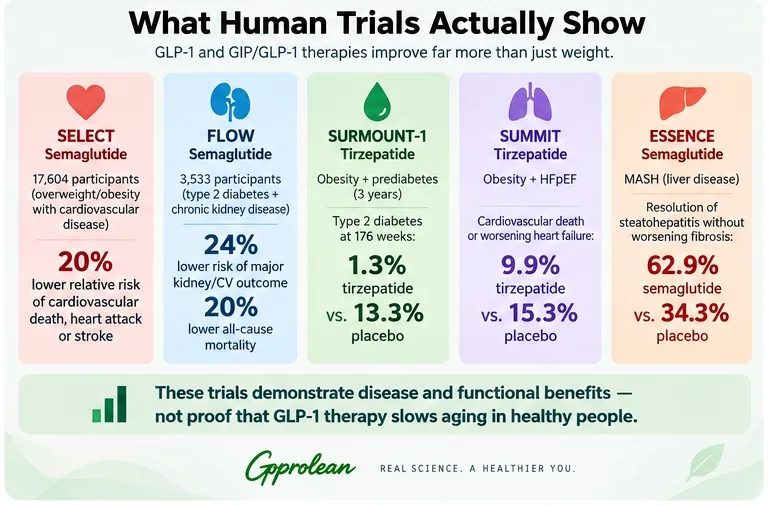
IMPORTANT
These trials demonstrate disease and functional benefits—not proof that GLP-1 therapy slows aging in healthy people.
What About the Brain?
The brain may be the best example of why mechanistic excitement must be separated from clinical proof.
Experimental GLP-1 research has been remarkably interesting.
In mice, systemic GLP-1 receptor agonist treatment has been shown to reverse aspects of age-associated gene-expression patterns in glial and neurovascular cells. [7]
Animal studies have also suggested effects involving:
- neuroinflammation,
- insulin signaling,
- mitochondrial function,
- synaptic biology,
- autophagy.
Observational studies have raised the possibility of lower dementia risk among people receiving GLP-1 therapies.
Those findings generated considerable enthusiasm.
Then came the randomized trials.
In 2026, results from two large phase 3 trials—EVOKE and EVOKE+—were published.
Together they included approximately 3,800 participants with early symptomatic Alzheimer's disease.
Oral semaglutide did not significantly slow clinical progression compared with placebo on the primary Clinical Dementia Rating–Sum of Boxes endpoint. [21]
Likewise, the phase 3 exenatide trial in Parkinson's disease did not demonstrate improvement in its primary or secondary disease-progression outcomes. [22]
These results do not mean GLP-1 signaling has no relevance to brain health.
Metabolic health, blood pressure, sleep apnea, cardiovascular disease and diabetes themselves influence brain health.
But they do demonstrate an essential rule of longevity medicine:
A compelling biological mechanism is not the same thing as a proven clinical treatment.
The Muscle Paradox: Losing Weight Is Not Enough
Perhaps the most important issue for GLP-1 treatment through a longevity lens is skeletal muscle.
Muscle is not merely cosmetic.
Skeletal muscle contributes to:
- mobility,
- insulin sensitivity,
- glucose disposal,
- balance,
- bone loading,
- fall prevention,
- metabolic reserve,
- recovery from illness,
- maintenance of independence.
Loss of muscle mass and strength becomes increasingly important with age.
When body weight decreases—whether through diet, bariatric surgery or medication—some lean tissue is generally lost along with fat.
In a DXA substudy of SURMOUNT-1, participants receiving tirzepatide lost approximately:
33.9% of fat mass
and
10.9% of lean mass
from their respective baseline compartments.
Approximately 75% of total weight lost was fat mass and 25% was lean mass. [20]
That ratio is not necessarily abnormal for major weight loss.
But for a 70-year-old with low baseline muscle mass, the clinical consequences may be very different from those for a 35-year-old with substantial muscle reserve.
This is why a healthspan-oriented metabolic program should not define success simply as:
“How much weight did you lose?”
The better questions include:
How much visceral and total fat was lost?
How much muscle was preserved?
Did strength improve?
Did walking capacity improve?
Is dietary protein adequate?
Is resistance training part of the program?
Has sleep improved?
Has insulin resistance improved?
Are blood pressure, lipids, kidney function and liver markers improving?
Can the patient perform more—not less—than before treatment?
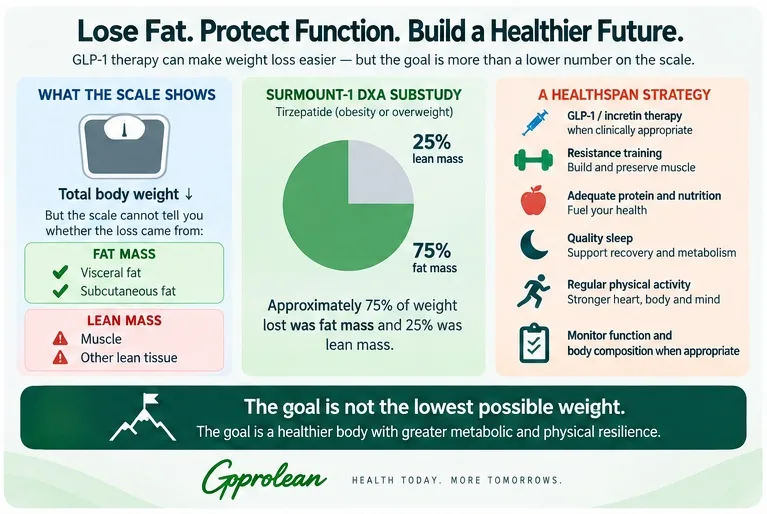
THE GOAL IS NOT THE LOWEST POSSIBLE WEIGHT.
The goal is a healthier body with greater metabolic and physical resilience.
So Are GLP-1 Medications “Anti-Aging Drugs”?
At this point, that description goes too far.
A true gerotherapeutic claim would ideally require evidence that treatment modifies biological aging itself and ultimately delays multiple age-related diseases or functional decline beyond what would be expected from treating an existing disease.
GLP-1 therapies clearly influence several pathways that overlap with aging biology.
They also have clinical effects across multiple organ systems.
But those observations do not establish that a metabolically healthy person without obesity, diabetes or another evidence-based indication should take a GLP-1 medication simply to live longer.
There is also an important problem of causality.
Suppose semaglutide reduces inflammation.
Did semaglutide directly suppress inflammatory pathways?
Did loss of visceral fat reduce inflammation?
Did improved insulin sensitivity decrease inflammatory signaling?
Did better sleep, mobility and diet contribute?
The answer may be all of the above.
From the patient's perspective, that may be perfectly acceptable.
From a geroscience perspective, however, it makes identifying a specific “anti-aging mechanism” considerably more difficult.
A Better Concept: Metabolic Geroprotection
A more useful concept may be metabolic geroprotection.
Imagine two 50-year-old adults.
One has:
- normal blood pressure,
- healthy visceral fat,
- normal glucose regulation,
- adequate skeletal muscle,
- good cardiorespiratory fitness,
- restorative sleep.
The other has:
- progressive central obesity,
- insulin resistance,
- hypertension,
- sleep apnea,
- fatty liver,
- chronic inflammation,
- declining mobility.
Chronologically, they are the same age.
Physiologically, their trajectories may be very different.
For the second patient, effectively treating metabolic dysfunction could plausibly delay the emergence of several diseases that would otherwise dominate the next 20 years.
That does not require claiming the medication made the patient “younger.”
Preventing diabetes, heart failure hospitalization, myocardial infarction, progressive liver disease and kidney failure would itself represent a meaningful extension of healthspan.
This is arguably where GLP-1 medicine intersects most convincingly with longevity medicine.
Who Is Most Likely to Gain a lifehspan Benefit?
The strongest evidence is not in healthy, lean people seeking optimization.
It is in people with measurable metabolic burden.
Depending on the medication and approved indication, evidence is particularly relevant to people with conditions such as:
- obesity,
- overweight plus cardiometabolic risk,
- type 2 diabetes,
- prediabetes with obesity,
- established cardiovascular disease,
- chronic kidney disease in diabetes,
- obesity-related HFpEF,
- obstructive sleep apnea with obesity,
- metabolic liver disease.
For these individuals, the treatment target should be the underlying disease and risk profile.
Any potential influence on biological aging should be considered a research question or secondary hypothesis—not a guaranteed therapeutic effect.
What Should Be Measured in a Healthspan-Oriented GLP-1 Program?
If the goal is metabolic health rather than simply weight loss, monitoring should reflect that broader objective.
A physician-guided program may consider several domains based on the individual's history and risk factors.
Adiposity
Body weight is useful but incomplete.
Other measures can include:
- waist circumference,
- waist-to-height relationship,
- body composition when clinically useful,
- changes in visceral adiposity.
Glucose regulation
Depending on the individual:
- fasting glucose,
- HbA1c,
- insulin-related measures where appropriate.
Cardiovascular risk
Potential markers include:
- blood pressure,
- lipid profile,
- smoking status,
- family history,
- established vascular disease.
Liver health
Appropriate patients may need:
- ALT,
- AST,
- fibrosis-risk assessment,
- imaging or specialist evaluation when indicated.
Kidney health
Depending on risk:
- creatinine/eGFR,
- urine albumin-to-creatinine ratio.
Muscle and physical function
Especially in older adults:
- strength,
- exercise tolerance,
- resistance-training participation,
- body composition when appropriate.
Sleep
Patients with suspected sleep apnea should be evaluated rather than assuming daytime fatigue is simply due to weight.
Nutrition
Reduced appetite is not automatically equivalent to improved nutrition.
A patient can eat less while simultaneously becoming deficient in protein, fiber or micronutrients.
That distinction becomes increasingly important with age.
Biological-Age Testing: Interesting, but Don't Let the Score Become the Goal
The 2026 semaglutide epigenetic-aging study makes biological-age testing scientifically interesting.
But these tests still require caution.
Different epigenetic clocks measure different biological features.
A treatment can move one clock but not another.
And a change in predicted biological age does not automatically prove reduced mortality, better cognition or preserved functional independence.
The most important endpoints remain clinically meaningful ones:
Can you move?
Can you exercise?
Can you maintain muscle?
Is your cardiovascular risk falling?
Is your glucose regulation improving?
Are your liver and kidney remaining healthy?
Are you sleeping well?
Are you avoiding major chronic disease?
A healthspan program should therefore use advanced biomarkers to supplement clinical medicine—not replace it.
What We Still Don't Know
Despite enormous progress, several fundamental questions remain unanswered.
Does GLP-1 therapy extend human lifespan?
We do not know.
Some trials demonstrate reduced mortality in specific high-risk populations, but a general lifespan-extension effect has not been established.
Can GLP-1 therapy slow aging in metabolically healthy adults?
There is no adequate evidence to answer this.
Are epigenetic-age improvements sustained?
The 2026 semaglutide study lasted only 32 weeks.
Longer prospective trials are required.
Are the biological-aging effects independent of weight loss?
Probably not entirely.
Separating direct receptor-mediated effects from secondary metabolic improvements remains difficult.
Can GLP-1 therapies prevent dementia?
Despite encouraging observational and laboratory research, semaglutide did not slow established early Alzheimer's disease in two large phase 3 trials.
Prevention remains a different question and requires different studies.
What happens to muscle over decades?
Current trials largely evaluate months or several years, not multiple decades.
This question may become especially important as millions of adults remain on incretin therapies long term.
Which patients experience the largest healthspan benefit?
Future geroscience may increasingly integrate genetics, body composition, metabolic biomarkers, inflammatory profiles and functional testing to identify who benefits most.
Medication Is Only One Part of Longevity
One of the biggest mistakes in modern longevity medicine is searching for a single molecule that replaces the fundamentals.
It probably does not exist.
GLP-1 therapy can make weight reduction and appetite control dramatically easier for appropriately selected patients.
But it cannot replace:
Resistance training, which provides a unique stimulus for preserving skeletal muscle and strength.
Aerobic exercise, which influences cardiovascular fitness, mitochondrial adaptation and functional capacity.
Adequate nutrition, especially sufficient protein and micronutrient density during substantial weight reduction.
Sleep, because metabolic health and sleep physiology are deeply interconnected.
Smoking avoidance, arguably one of the most powerful longevity interventions available.
Blood pressure and lipid management, which remain fundamental to cardiovascular prevention.
A 20-pound weight loss accompanied by malnutrition and muscle weakness is not the same health outcome as a 20-pound weight loss accompanied by improved strength, blood pressure, glucose regulation and cardiorespiratory fitness.
That is why medication-assisted weight management should ideally become part of a broader health strategy rather than an isolated prescription.
A Note About Compounded GLP-1 Medications
Patients should understand an important regulatory distinction.
FDA-approved medications and compounded medications are not the same regulatory category.
Compounded medications are not FDA-approved and do not undergo FDA premarket review for safety, effectiveness and manufacturing quality in the manner required for an approved drug.
The FDA has also warned against describing compounding pharmacies as “FDA-approved” or “FDA-licensed” facilities.
When compounding is clinically appropriate and legally permitted, patients should receive clear information regarding exactly what is being prescribed, where it is being dispensed, dosing instructions and how the product differs from an FDA-approved medication.
Transparency is especially important with therapies likely to be used for extended periods.
Where the Science Stands in 2026
The GLP-1 longevity story has evolved significantly.
Several years ago, the argument was largely mechanistic:
GLP-1 signaling lowers glucose.
It affects inflammation.
It influences mitochondria.
Perhaps it therefore affects aging.
Today, the evidence is more substantial.
We now know that modern incretin therapies can affect major clinical outcomes across multiple organ systems.
We have seen reductions in cardiovascular events.
We have seen slowing of kidney disease.
We have seen large reductions in diabetes progression.
We have seen improvement in obesity-related heart failure.
We have seen improvement in sleep apnea.
We have seen histologic improvement in metabolic liver disease.
And for the first time, we have a randomized human study showing changes in several measures of epigenetic aging.
Yet we have also seen important negative findings.
Semaglutide did not slow clinical progression of established early Alzheimer's disease.
Exenatide did not demonstrate disease modification in Parkinson's disease.
Direct effects on telomere attrition, genomic instability, stem-cell exhaustion and several other primary aging mechanisms remain poorly established.
That is exactly what good science should look like.
Promising findings and disappointing findings coexist.
The correct response is not to choose whichever side makes the better headline.
It is to update the model.
The GoProLean Perspective: Treat the Metabolic Disease, Protect the Future
The most scientifically defensible way to think about GLP-1 therapy and longevity is not:
“Take this medication so you don't age.”
It is:
“When metabolic dysfunction is placing your future health at risk, treating that dysfunction may help preserve the systems you will depend on as you age.”
That difference matters.
For someone with obesity, insulin resistance, sleep apnea, metabolic liver disease or high cardiovascular risk, improving metabolic health may influence much more than body weight.
It may reduce cumulative stress on:
- the heart,
- blood vessels,
- kidneys,
- liver,
- joints,
- glucose-regulatory system,
- inflammatory system.
But the treatment should preserve skeletal muscle, support adequate nutrition, encourage physical activity and be integrated with management of the patient's broader cardiovascular and metabolic risk.
The goal is not simply to weigh less.
The goal is to arrive at 60, 70 and 80 with as much physiological reserve as possible.
Final Perspective
GLP-1 receptor agonists and related incretin therapies represent one of the most important advances in metabolic medicine in decades.
Their relevance to healthy aging is real—but frequently misunderstood.
The strongest evidence does not show that these medications “reverse aging.”
Instead, it shows that they can improve diseases and physiological stresses that themselves shorten healthspan.
They improve glucose regulation.
They reduce excess adiposity.
They can reduce inflammatory burden.
They can improve cardiovascular outcomes.
They can protect kidney function in high-risk patients.
They can improve obesity-related heart failure, sleep apnea, metabolic liver disease and physical function.
And early evidence suggests that their effects may extend as far as measurable epigenetic-aging biology.
That makes GLP-1 therapy scientifically interesting to geroscience.
It does not make it a fountain of youth.
For the right patient, however, preventing the heart attack, diabetes diagnosis, kidney failure, progressive liver disease or loss of mobility that might otherwise occur years earlier is already a profound accomplishment.
That is what healthspan medicine should ultimately be about:
not chasing a younger number,
but preserving metabolic health, physical capacity and physiological resilience for as much of life as possible.
Keep reading: NAD+ Injections and Aging: What If You Never Ran Low? looks at another molecule longevity researchers are watching, and at why proving anything about human aging takes so long.
The whole series: Longevity Medicine: What If You Started With What You Want to Change? puts all seven treatments side by side, by what you want to change. Longevity Myths: What If the Headline Was Never in the Study? gives five questions to ask of any longevity claim.
Medical Disclaimer
This article is for educational purposes only and does not constitute medical advice. Prescription medications including GLP-1 receptor agonists and GIP/GLP-1 receptor agonists require individualized evaluation by a qualified healthcare professional. Benefits, risks, contraindications and appropriate monitoring vary by patient. Evidence regarding GLP-1 therapies and biological aging remains an active area of research, and these medications should not be considered proven treatments for slowing or reversing aging.
References
1. López-Otín C, Blasco MA, Partridge L, Serrano M, Kroemer G. The hallmarks of aging. Cell. 2013;153(6):1194–1217. DOI: 10.1016/j.cell.2013.05.039. PMID: 23746838.
2. López-Otín C, Blasco MA, Partridge L, Serrano M, Kroemer G. Hallmarks of aging: An expanding universe. Cell. 2023;186(2):243–278. DOI: 10.1016/j.cell.2022.11.001. PMID: 36599349.
3. Kroemer G, Maier AB, Cuervo AM, et al. From geroscience to precision geromedicine: Understanding and managing aging. Cell. 2025;188(8):2043–2062. DOI: 10.1016/j.cell.2025.03.011. PMID: 40250404.
4. Correa-Burrows P, Burrows R, Kennedy BK, Gonzalez-Billault C. Obesity and biological aging across the life course: A geroscience framework for metabolic health. Metabolism. 2026;181:156634. DOI: 10.1016/j.metabol.2026.156634. PMID: 42144183.
5. Corley MJ, Dwaraka VB, Pang APS, et al. Semaglutide slows epigenetic aging in a randomized trial of HIV-associated lipohypertrophy. Nature Communications. 2026;17:6606. DOI: 10.1038/s41467-026-72861-3. PMID: 42156721.
6. Luna-Marco C, de Marañon AM, Hermo-Argibay A, et al. Effects of GLP-1 receptor agonists on mitochondrial function, inflammatory markers and leukocyte-endothelium interactions in type 2 diabetes. Redox Biology. 2023;66:102849. PMID: 37591012.
7. Li Z, Chen X, Vong JSL, et al. Systemic GLP-1R agonist treatment reverses mouse glial and neurovascular cell transcriptomic aging signatures in a genome-wide manner. Communications Biology. 2021;4:656. DOI: 10.1038/s42003-021-02208-9. PMID: 34079050.
8. Liraglutide and AMPK/mTOR-mediated autophagy in experimental metabolic-stress models. PMID: 28712893.
9. Zhong W, Yang Y, Wang Y. Liraglutide attenuates high glucose-induced endothelial cell senescence and dysfunction via SIRT1-mediated deacetylation of p53/p65. 2025. DOI: 10.1016/j.tice.2025.102882. PMID: 40198926.
10. Effects of GLP-1 analogues and agonists on the gut microbiota: A systematic review. 2025. PMID: 40284168.
11. Lincoff AM, Brown-Frandsen K, Colhoun HM, et al. Semaglutide and cardiovascular outcomes in obesity without diabetes. N Engl J Med. 2023;389:2221–2232. DOI: 10.1056/NEJMoa2307563. PMID: 37952131.
12. Scirica BM, Lincoff AM, Lingvay I, et al. The Effect of Semaglutide on Mortality and COVID-19-Related Deaths: An Analysis From the SELECT Trial. J Am Coll Cardiol. 2024;84:1632–1642. DOI: 10.1016/j.jacc.2024.08.007. PMID: 39217559.
13. Perkovic V, Tuttle KR, Rossing P, et al. Effects of Semaglutide on Chronic Kidney Disease in Patients with Type 2 Diabetes. N Engl J Med. 2024;391:109–121. DOI: 10.1056/NEJMoa2403347. PMID: 38785209.
14. Kosiborod MN, Abildstrøm SZ, Borlaug BA, et al. Semaglutide in Patients with Heart Failure with Preserved Ejection Fraction and Obesity. N Engl J Med. 2023;389:1069–1084. DOI: 10.1056/NEJMoa2306963. PMID: 37622681.
15. Packer M, Zile MR, Kramer CM, et al. Tirzepatide for Heart Failure with Preserved Ejection Fraction and Obesity. N Engl J Med. 2025;392:427–437. DOI: 10.1056/NEJMoa2410027. PMID: 39555826.
16. Jastreboff AM, et al. Tirzepatide for Obesity Treatment and Diabetes Prevention. N Engl J Med. 2025;392:958–971. DOI: 10.1056/NEJMoa2410819. PMID: 39536238.
17. Sanyal AJ, Newsome PN, Kliers I, et al. Phase 3 Trial of Semaglutide in Metabolic Dysfunction-Associated Steatohepatitis. N Engl J Med. 2025;392:2089–2099. DOI: 10.1056/NEJMoa2413258. PMID: 40305708.
18. Malhotra A, Grunstein RR, Fietze I, et al. Tirzepatide for the Treatment of Obstructive Sleep Apnea and Obesity. N Engl J Med. 2024;391:1193–1205. DOI: 10.1056/NEJMoa2404881. PMID: 38912654.
19. Bliddal H, Bays H, Czernichow S, et al. Once-Weekly Semaglutide in Persons with Obesity and Knee Osteoarthritis. N Engl J Med. 2024;391:1573–1583. DOI: 10.1056/NEJMoa2403664. PMID: 39476339.
20. Look M, Dunn JP, Kushner RF, et al. Body composition changes during weight reduction with tirzepatide in the SURMOUNT-1 study of adults with obesity or overweight. Diabetes Obes Metab. 2025;27:2720–2729. DOI: 10.1111/dom.16275. PMID: 39996356.
21. Cummings JL, Atri A, Sano M, et al. Efficacy and safety of oral semaglutide in early-stage symptomatic Alzheimer's disease: evoke and evoke+. Lancet. 2026;407:2167–2179. DOI: 10.1016/S0140-6736(26)00459-9. PMID: 41865758.
22. Vijiaratnam N, Girges C, Auld G, et al. Exenatide once a week versus placebo as a potential disease-modifying treatment for people with Parkinson's disease: a phase 3 randomized trial. Lancet. 2025;405:627–636. DOI: 10.1016/S0140-6736(24)02808-3. PMID: 39919773.
23. Ferrucci L, Fabbri E. Inflammageing: chronic inflammation in ageing, cardiovascular disease, and frailty. Nat Rev Cardiol. 2018;15:505–522. DOI: 10.1038/s41569-018-0064-2. PMID: 30065258.
24. Body mass index is associated with epigenetic age acceleration in visceral adipose tissue of subjects with severe obesity. PMID: 31791395.
25. Scheen AJ. GLP-1 receptor agonists, body composition, skeletal muscle and risk of sarcopaenia: from promising findings in animal models to debated concern in human studies. Diabetes Metab. 2025;51:101681. DOI: 10.1016/j.diabet.2025.101681. PMID: 40571191.
More in Research

October 20, 2026
Stopping GLP-1: What to Expect for Weight, Appetite, and Labs
Research shows drug clearance, biology and behavior all matter when you stop GLP-1 medications. This guide explains timing, appetite return, metabolic markers and practical defenses.

October 8, 2026
Longevity Myths: What If the Headline Was Never in the Study?
Most longevity myths start with a real study. Follow one from the lab to the headline, then use five questions on any claim you read, including ours. Part of our series on aging.

October 8, 2026
Longevity Medicine: What If You Started With What You Want to Change?
Longevity medicine is not one treatment. It is seven, and each answers a different question. What each one is, what the studies show, who it suits and what it costs. The guide to our series on aging.