

Hormone Optimization
Injectable TRT.
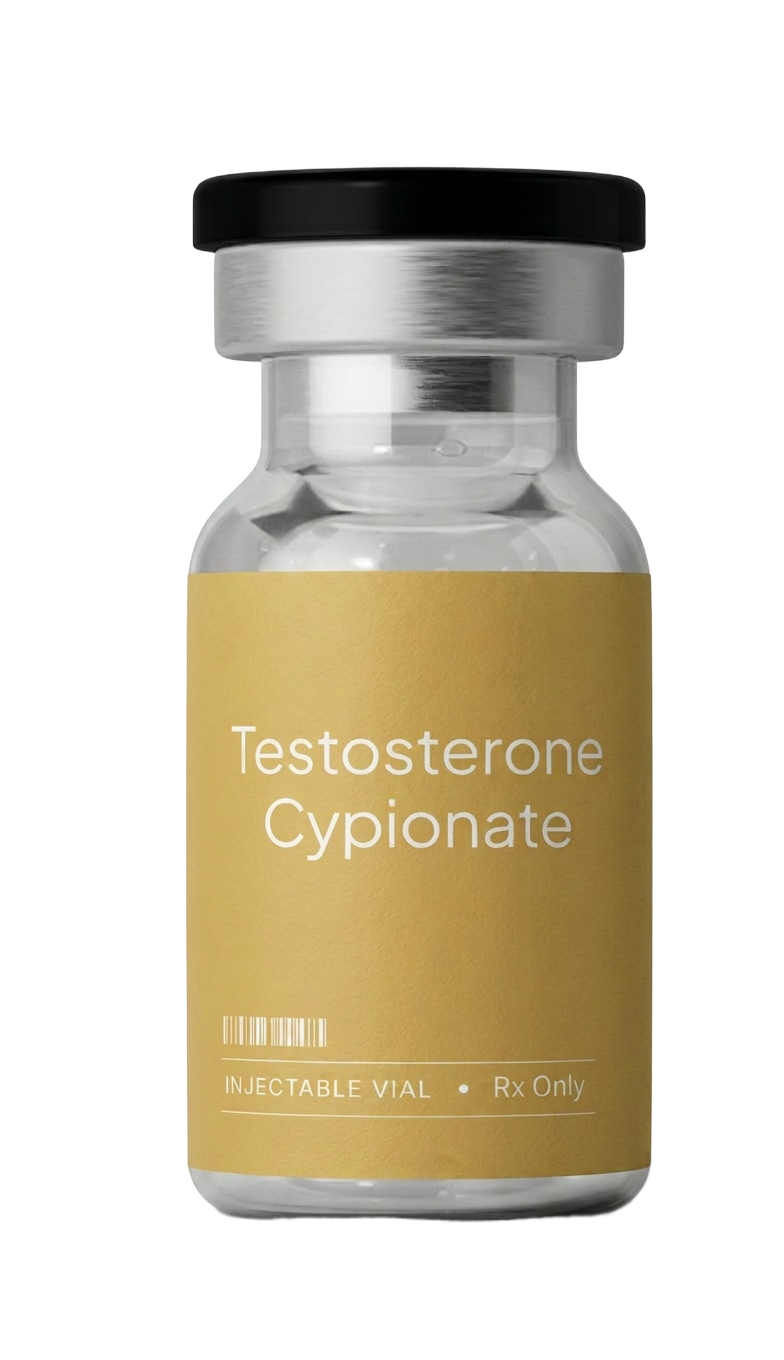
Testosterone Cypionate 200mg/mL, physician-guided for men with clinically low testosterone. Every supply included.
About
The protocol.
Testosterone Cypionate 200mg/mL, physician-guided TRT for men with clinically low testosterone. Every supply you need ships with it. IM or sub-q, on a schedule your physician sets for you.
- May improve energy, drive, and focus
- Confidence and mood support
- Evidence-based, physician-guided dosing
- Flexible dosing your physician tailors to you
- All injection supplies included

MODULE 01
Get your energy back.
Low T doesn't always announce itself. It shows up as the 3pm crash, the brain fog, the workouts that used to feel easy. When levels are restored under a physician's care, many men notice energy, motivation, and mental clarity return first, often within the first few weeks.

MODULE 02
Drive and performance, reignited.
Libido and erectile function are some of the earliest things to improve for many patients on TRT. If ED is part of the picture, your physician can layer in support. That's what the Sexual Wellness program is for.

MODULE 03
Build muscle. Keep it.
TRT isn't a shortcut around the gym. Combined with training, sleep, and protein, many men see better recovery, easier muscle maintenance, and shifts in body composition over a few months.

MODULE 04
Mood, focus, steadier.
Low motivation, irritability, and that flat feeling overlap with low T. Many patients report improved mood and confidence. One honest note: TRT supports well-being but isn't a substitute for mental-health care.
Libido, energy, mood may lift.
Body composition and muscle build.
MODULE 05
What to expect, week by week.
Most patients notice changes gradually, not overnight. Energy, mood and libido tend to move first, while strength and body composition build over several months. Knowing the timeline up front is the easiest way to stay the course.
The process
How it works.
A real physician reviews your labs and decides your protocol. No guesswork, no algorithm making medical calls. Here is the whole path from first click to first dose.
Intake
A quick health questionnaire and history, all from home.
Labs
Baseline bloodwork: total and free testosterone, estradiol, hematocrit and PSA.
Physician review
A board-certified doctor reviews everything and builds your plan.
Ships to you
Medication and every supply arrive in 24 to 48 hours.
Follow-up bloodwork about every 3 months keeps your protocol dialed in.
Complete the picture
Also in the program.
TRT rarely travels alone. These pair naturally with your protocol, whether you want to skip the needle, protect fertility, or keep estrogen in check. Your physician decides what fits.
Hormone Optimization
Oral TRT
Same goal, no injection.
Learn more →
Hormone Optimization
Fertility Support
Protect fertility while you optimize.
Learn more →
Hormone Optimization
Estrogen Management
Keep estradiol in check.
Learn more →
Hair & Skin
Hair & Skin
Get ahead of thinning.
Learn more →
Sexual Wellness
Sexual Wellness
Extra support when you want it.
Learn more →
Weight Loss
GLP-1 Weight Loss
Pair hormones with a GLP-1.
Learn more →
Longevity
Sermorelin
Recovery and longevity.
Learn more →
Longevity
NAD+
Energy at the cellular level.
Learn more →
Patient voices
Care that shows up.
We will not promise a number on a lab report. What we can promise is a real doctor, a clear plan, and medication at your door, fast.
50
States covered
24–48h
Average ship time
503A
FDA-approved pharmacies
"Finally talked to an actual doctor who had time for my questions."
"Intake to my front door in two days. I kept waiting for a catch."
"Everything explained in plain English. No pressure, no upsell games."
Questions
We're here to help.
Everything you might want to know before, during, and long after you start. If your question isn't here, your physician is one message away.
Getting started
TRT is a physician-guided treatment that restores testosterone levels in men with clinically low testosterone. Testosterone plays a role in energy, mood, libido, muscle maintenance, recovery, focus, and overall well-being. The goal is to optimize your levels under medical supervision, not push them unnaturally high.
Common symptoms include low energy, fatigue, brain fog, reduced motivation, low libido, erectile dysfunction, mood changes, increased body fat, reduced muscle mass, and poor recovery. A diagnosis requires both symptoms and lab testing that confirms low levels.
You may be a candidate if you have symptoms of low testosterone, lab work confirming a deficiency, and you complete a medical evaluation with a licensed provider. Your provider reviews your symptoms, health history, medications, bloodwork, and lifestyle before recommending treatment.
There is no single number that automatically qualifies someone. Providers look at total testosterone, free testosterone, SHBG, estradiol, your symptoms, and overall health history together before deciding if treatment is appropriate.
Most programs begin with a health questionnaire, a medical history review, bloodwork, and a provider evaluation. If treatment is appropriate, your medication and supplies ship directly to your home from a licensed pharmacy.
Benefits & timeline
Potential benefits include increased energy, improved libido, better erectile function, improved mood, sharper focus, increased muscle mass, better recovery, reduced body fat, and improved overall well-being.
Most patients improve gradually. Libido, energy, and mood may improve within 2 to 6 weeks, while body composition and muscle changes often take several months.
TRT is not a weight loss medication. That said, many patients experience improved energy, recovery, and muscle maintenance, which can support fat loss when combined with healthy habits. A GLP-1 program may be a better fit if weight is your main goal.
Treatment & injections
Options include injections, creams, gels, troches (lozenges), and patches. Many providers consider injections one of the most predictable and effective methods.
Not usually. Testosterone injections are typically given 1 to 2 times per week. Some clinicians do move patients to smaller, more frequent doses to smooth out peaks and valleys. Your provider sets the schedule that fits you.
Most testosterone injections are intramuscular (IM), though sub-q is also an option depending on your protocol.
Most testosterone injections use a 25 to 27 gauge needle, roughly 0.5 to 1.5 inches, depending on the injection site and your body type.
You don't. Your medication and injection supplies, including needles and syringes, ship directly to your home.
No. Needles and syringes should never be reused.
Labs & monitoring
Yes. Baseline bloodwork is one of the most important parts of safe hormone optimization. It confirms whether your symptoms are truly hormone-related and lets your provider build a safer, more personalized plan.
Common baseline labs include testosterone levels, estradiol, hematocrit, hemoglobin, PSA, kidney function, and other hormone markers depending on your provider.
Most providers recommend follow-up bloodwork about every 3 months, though some patients may need more frequent monitoring.
Safety & side effects
When prescribed appropriately and monitored regularly by licensed providers, TRT is generally considered safe and effective for men with documented testosterone deficiency.
Yes. Some testosterone converts into estradiol. Signs of elevated estrogen can include water retention, mood changes, nipple sensitivity, or breast tenderness. If needed, your physician can add anastrozole or DIM.
Yes. Acne and oily skin are among the more common side effects, especially in the first few months while levels stabilize.
Not for everyone. Testosterone can convert into DHT, which is linked to follicle shrinkage in men genetically predisposed to male-pattern baldness. If you are predisposed, a physician-guided hair program can run alongside your protocol.
Research on TRT and cardiovascular health is still evolving. Some studies suggest it may support metabolic health in certain patients, others suggest possible increased risk for some individuals. That is exactly why screening, blood pressure monitoring, bloodwork, and a cardiovascular history review matter before and during treatment.
Current research has not clearly shown that medically supervised TRT causes prostate cancer. Because testosterone can influence prostate tissue, providers monitor PSA, urinary symptoms, and prostate history. A history of prostate conditions may require extra evaluation.
It may, particularly in patients with untreated or severe obstructive sleep apnea. If you snore loudly, feel tired during the day, get morning headaches, or wake gasping for air, tell your provider before starting. Treating sleep apnea often improves outcomes.
Reach out if you experience shortness of breath, severe acne, significant swelling, persistent headaches, mood changes, elevated blood pressure, breast tenderness, or any unexpected side effects.
Fertility & long-term
TRT can significantly reduce sperm production and fertility while you are on it. If preserving fertility matters to you, discuss alternatives such as hCG or enclomiphene with your provider before starting.
Some men experience testicular shrinkage because natural testosterone production decreases on TRT. Certain medications can help maintain testicular size and function.
TRT is generally a long-term treatment. Many patients continue for years because symptoms often return after stopping.
Yes. Keep in mind that natural production is often suppressed during treatment, so some patients have temporary low-testosterone symptoms after stopping.
Yes. A vasectomy prevents sperm transport but does not control testosterone production, so it usually does not prevent someone from being a candidate. Your provider still reviews symptoms, bloodwork, and overall health first.
Storage, travel & doses
No. Testosterone is generally stored at room temperature. Refrigeration is not recommended because oil-based solutions can become cloudy or crystallized.
Excessive heat can reduce effectiveness and may damage solutions. If your medication was exposed to prolonged heat or looks separated or abnormal, contact your provider before using it.
Cold can cause crystallization. Gently warming the vial in your hands or in a sealed bag in warm water can often restore it. Do not use medication that stays cloudy or frozen.
Yes. Testosterone is a controlled substance, so keep it and your supplies in your carry-on, travel with a copy of your prescription, and check local laws for international trips.
Store at recommended room temperature, away from direct sunlight, and out of reach of children. Avoid excessive heat or freezing, and always follow the pharmacy instructions included with your prescription.
Take it as soon as you remember, unless it is very close to your next dose. Never double up. Missing a single dose is usually not dangerous, but consistency keeps your levels stable.
Lifestyle & whole health
In many cases, yes, under medical supervision. Symptoms of low testosterone and depression can overlap, including low motivation, fatigue, low libido, brain fog, and mood changes. TRT may complement mental-health care but is not a replacement for it. Your provider reviews your medications and history first.
Moderate alcohol is not automatically off-limits, but heavy use can affect hormone levels, sleep, liver health, recovery, and weight. Be honest with your provider about your habits so treatment can be monitored properly.
Some men with low testosterone report better confidence, mood, and motivation. Anxiety is complex, though, and TRT is not a standalone treatment for it. A broader approach may include hormone optimization, sleep, exercise, stress management, and mental-health support.
Some men with diabetes or insulin resistance also have low testosterone, since hormone and metabolic health are closely linked. Providers may review blood sugar, weight, cardiovascular risk, and hormone levels together, and some patients benefit from a supervised weight program alongside hormone care.
Some patients notice better recovery, strength maintenance, and exercise motivation. TRT is not a substitute for training, nutrition, sleep, and recovery, and the goal of physician-guided care is optimization, not performance enhancement.
Levels do decline with age, but significant symptoms should not simply be written off. Fatigue, low libido, poor recovery, and brain fog can have hormonal causes. Bloodwork and evaluation help tell the difference.
Yes. Overnight shifts and disrupted sleep can hurt hormone production, recovery, stress, and metabolic health. Improving sleep and recovery can support hormone health alongside treatment when appropriate.
Yes. Chronic stress and high cortisol can affect testosterone, sleep, recovery, weight, and mental health over time. A comprehensive plan often includes exercise, sleep, stress management, nutrition, and hormone evaluation.
Important medical disclaimer. TRT is a prescription medical therapy and should only be used under the supervision of a licensed healthcare provider. Individual results vary, and treatment decisions should be based on symptoms, laboratory findings, medical history, and provider evaluation.